
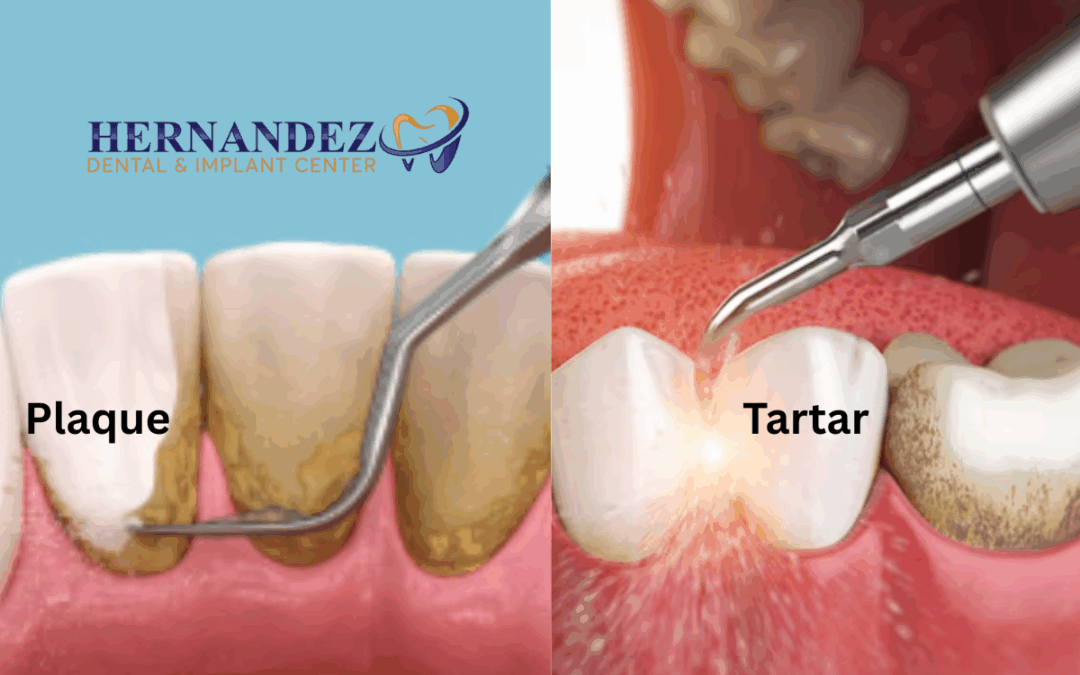
Have you ever run your tongue across your teeth and felt a fuzzy coating? Or noticed yellow buildup near your gumline that won’t brush away? If so, you’re dealing with issues related to plaque vs tartar, two common dental problems affecting people throughout San Antonio.
While these terms often get used together, plaque and tartar are actually quite different. Understanding the difference helps you protect your teeth and gums from serious damage. This guide explains everything you need to know in simple, clear language.
Key Takeaways
- Plaque = soft bacterial film that forms quickly and can be removed at home
- Tartar = hardened plaque that only a dentist can remove
- Plaque forms within hours; tartar forms within 1–3 days
- Both can lead to cavities and gum disease if not treated
What Is Dental Plaque?
Simple answer: Plaque is a soft, sticky film made of bacteria that constantly forms on everyone’s teeth throughout the day.
Think of plaque as a thin layer of germs mixed with food particles and saliva. It starts forming within hours after you brush. In fact, plaque develops so quickly that you can feel it with your tongue just a few hours after eating.
Plaque is usually colorless or pale yellow, making it hard to see. However, you can definitely feel it. When you wake up in the morning, that fuzzy feeling on your teeth? That’s plaque buildup from overnight.
The good news is that plaque is soft. Therefore, you can remove it easily with regular brushing and flossing. But here’s the catch: if you don’t remove plaque daily, it hardens into something much more serious, tartar.
What Is Tartar (Dental Calculus)?
Simple answer: Tartar is hardened plaque that has turned into a rough, crusty deposit that only a dentist can remove.
When plaque stays on your teeth for 24 to 72 hours without being removed, it absorbs minerals from your saliva. This process turns soft plaque into hard tartar. Additionally, dental professionals also call tartar “calculus.”
Unlike plaque, tartar is easy to see. It appears as yellow, brown, or even black crusty deposits. Furthermore, tartar usually forms along the gumline and behind your lower front teeth.
Tartar feels rough and bumpy when you run your tongue over it. Moreover, it bonds so tightly to your tooth enamel that brushing won’t remove it. Only professional dental tools can safely break up and remove tartar.
Key Differences: Plaque vs Tartar
| Feature | Plaque | Tartar |
| Texture | Soft, sticky | Hard, calcified |
| Appearance | Clear to pale yellow | Yellow or brown |
| Removal | Brush and floss at home | Dentist only |
| Forms in | 4-12 hours | 1-3 days |
| Risk Level | Medium (cavities) | High (gum disease) |
Quick memory tip: Plaque is stage one (soft and removable). Tartar is stage two (hard and stuck). Once plaque becomes tartar, you need professional help.
What Causes Plaque and Tartar Buildup?
Several factors make plaque and tartar form faster:
Poor Oral Hygiene: Skipping brushing sessions allows plaque to accumulate quickly. Similarly, not flossing lets plaque hide between teeth where your toothbrush can’t reach.
Diet High in Sugar and Starch: Bacteria in your mouth love sugar. When you eat candy or drink soda, you’re feeding these bacteria. Here in San Antonio, sweet tea and barbecue are part of our culture, but they can contribute to plaque buildup without proper oral care.
Dry Mouth: Saliva helps wash away food particles and neutralize acids. However, certain medications or not drinking enough water can cause dry mouth. Living in San Antonio’s hot climate makes staying hydrated especially important.
Smoking and Tobacco Use: Tobacco products significantly increase tartar formation. Furthermore, smoking reduces blood flow to your gums, making it harder for them to stay healthy.
Crowded Teeth: When teeth overlap or sit crooked, they create tight spaces that are difficult to clean. Consequently, plaque accumulates in these areas and quickly turns into tartar.
Signs and Symptoms to Watch For
Early Warning Signs of Plaque
- Teeth feel fuzzy or rough
- Mild bad breath, especially in the morning
- Slight gum tenderness when brushing
- Occasional bleeding when flossing
Advanced Signs of Tartar Buildup
- Hard yellow or brown deposits you can see
- Persistent bad breath that doesn’t improve
- Red, swollen gums that bleed easily
- Gums pulling away from teeth
- Increased sensitivity to hot or cold
- Loose teeth (in severe cases)
If you notice tartar symptoms, it’s time to schedule a professional cleaning. However, even if you only have early plaque symptoms, taking action now prevents bigger problems later.
How Plaque and Tartar Damage Your Health
Cavities: Plaque bacteria produce acids that eat away at tooth enamel. Over time, these acids create holes called cavities that can reach the nerve inside your tooth.
Gingivitis: When plaque sits along your gumline, it irritates your gums. This causes gingivitis the first stage of gum disease. Your gums become red, swollen, and bleed easily. Fortunately, gingivitis is reversible with good oral care.
Periodontitis: If gingivitis isn’t treated, it progresses to periodontitis. At this stage, the infection damages the tissue and bone holding your teeth in place. Eventually, teeth become loose and may fall out.
Bad Breath: The bacteria in plaque and tartar produce compounds that smell terrible. Therefore, persistent bad breath often signals that you need a professional cleaning.
Overall Health Connections: Research shows that bacteria from gum disease can enter your bloodstream. These bacteria may contribute to heart disease, diabetes complications, and respiratory infections.
How to Remove Plaque at Home
Brush Properly Twice Daily: Use a soft-bristled toothbrush and fluoride toothpaste. Brush for at least two minutes, holding your brush at a 45-degree angle to your gums. Additionally, replace your toothbrush every three months.
Floss Every Single Day: Flossing removes plaque from between teeth where your toothbrush can’t reach. Use about 18 inches of floss and curve it around each tooth in a C-shape.
Use Mouthwash: An antimicrobial mouthwash helps reduce bacteria that form plaque. However, mouthwash doesn’t replace brushing and flossing it’s an extra step.
Consider an Electric Toothbrush: Studies show that electric toothbrushes remove more plaque than manual brushing for most people. They provide consistent motion and often include timers.
How Dentists Remove Tartar
Regular Dental Cleaning: A dental hygienist uses special tools called scalers to carefully scrape tartar off your teeth. They remove tartar from above and slightly below your gumline. Afterward, they polish your teeth to create a smooth surface.
Most people need cleanings every six months. However, if you’re prone to heavy tartar buildup, your dentist might recommend cleanings every three to four months.
Deep Cleaning: When tartar extends deep below your gumline and you have gum disease, you need scaling and root planing. This procedure removes tartar from deep pockets and smooths root surfaces to help gums heal.
Never Try Removing Tartar at Home: You might see tartar removal tools sold online, but using them yourself is dangerous. Without proper training, you can scratch your enamel, cut your gums, or cause an infection.
Prevention: Keeping Plaque and Tartar Under Control
Daily Oral Hygiene Routine:
- Brush twice daily for two minutes
- Floss once daily, preferably before bedtime
- Rinse with antibacterial mouthwash
- Clean your tongue daily
Smart Dietary Choices: Limit sugary and starchy foods, especially sticky snacks. Choose tooth-friendly options like crisp vegetables, fresh fruits, cheese, and nuts.
Stay Hydrated: Drink plenty of water throughout the day, especially in San Antonio’s warm weather. Water helps wash away food particles and keeps your saliva flowing.
Avoid Tobacco Products: If you smoke or use tobacco, quitting is one of the best things you can do for your oral health. Tobacco dramatically increases tartar formation and gum disease risk.
Regular Dental Checkups: Visit your dentist every six months for examinations and cleanings. These visits catch problems early when they’re easiest to treat.
Use Tartar-Control Toothpaste: Some toothpastes contain ingredients that help slow tartar formation. Look for products with the ADA Seal of Acceptance.
When to Seek Professional Help
Certain signs mean you need to see a dentist:
- Hard deposits you can see or feel
- Gums that bleed regularly
- Bad breath that persists despite good oral hygiene
- Gums that look red, swollen, or puffy
- Gums pulling away from your teeth
- Pain when chewing
Don’t wait until you’re in pain. Early treatment is always easier, less expensive, and more successful.
Your Action Plan for Healthier Teeth
Today: Brush properly for two minutes and floss between all teeth.
This Week: Check if you need a new toothbrush and reduce sugary snacks.
This Month: Schedule a dental checkup if it’s been more than six months.
Ongoing: Maintain your daily oral hygiene routine and visit your dentist twice yearly.
Final Thoughts
Understanding the difference between plaque and tartar empowers you to take control of your oral health. Plaque is soft and removable at home, while tartar is hard, firmly attached, and requires professional cleaning. Both can harm your teeth and gums if ignored, yet both are completely preventable with consistent care.
Your smile is meant to last a lifetime. With good daily habits, routine dental checkups, and timely cleanings, you can keep plaque and tartar under control and protect your oral health for years to come.
Ready to Improve Your Oral Health?
If you’ve noticed buildup, bleeding gums, or it’s been more than six months since your last cleaning, now is the perfect time to act. Schedule a professional dental exam and cleaning with an experienced dentist in San Antonio to remove tartar safely and keep your smile healthy.
Call today to book your appointment: (210) 533-8191
Your path to cleaner, healthier teeth starts with one simple call.