
A brighter smile can change how you feel when talking, laughing, or showing up in photos. But before booking a treatment, most patients want to know one thing first: how does teeth whitening actually work?
Teeth whitening uses peroxide-based ingredients to break down stains sitting on and beneath the surface of your enamel. As those stain molecules get broken up, your teeth reflect more light and look brighter.
Whether your teeth have picked up discoloration from coffee, tea, tobacco, food, or just age, professional whitening can often restore a cleaner, more refreshed look.
Here’s what San Antonio patients should know about the process, their options, safety, cost, and what results to expect.
How Does Teeth Whitening Work?
Teeth whitening works through oxidation.
Professional whitening gels typically use hydrogen peroxide or carbamide peroxide. These molecules are small enough to move through the tiny pores in your enamel and reach the stain particles that make teeth look yellow, brown, or dull.
As peroxide breaks down, it releases oxygen, which breaks down those stains into smaller, less visible pieces. Once that happens, your teeth reflect light more evenly, making them look whiter.
What Affects Your Whitening Results
- The type and depth of the stains
- Which whitening method is used
- Your current oral health
- Your natural tooth color
- What you do (or don’t do) after treatment
Whitening doesn’t strip away enamel or scrape the tooth surface — it changes how the stain molecules inside the tooth look.
Why Do Teeth Get Stained in the First Place?
Enamel is hard, but it’s not solid. It’s full of microscopic pores where pigments from food, drinks, and tobacco settle in over time which is why teeth can dull even with regular brushing.
Coffee and Tea Stains
Coffee and tea are loaded with chromogens, dark pigments that latch onto enamel and gradually build up yellow or brown staining. If coffee or sweet tea is part of your daily routine, you’ve probably noticed this creeping in over the years.
Dark Foods and Drinks
A few common culprits:
- Red wine
- Dark sodas
- Berries
- Tomato-based sauces
- Soy sauce
- Curry and other richly colored spices
You don’t have to cut these out. Rinsing with water afterward and maintaining good oral hygiene helps limit staining.
Tobacco Stains
Smoking and chewing tobacco leave dark stains that tend to be more stubborn than food or drink stains.
Age-Related Discoloration
As you get older, the outer enamel layer thins naturally, letting more of the yellowish dentin underneath show through — which is part of why a smile can look darker even on healthy teeth.
Medications and Dental Conditions
Some medications, injuries, and developmental conditions cause discoloration from inside the tooth. These deeper stains don’t always respond as well to standard whitening. A dentist can look at what’s causing the discoloration and tell you which cosmetic option is actually likely to work.
The Science of Teeth Whitening in 3 Steps
Step 1: The Gel Reaches the Stains
Your dentist applies a hydrogen peroxide or carbamide peroxide gel. Because the molecules are small, they pass through enamel to reach stains that brushing can’t touch.
Step 2: The Peroxide Breaks the Stains Apart
As it reacts with the discoloration, it releases oxygen and breaks large stain molecules into smaller, less noticeable ones.
Step 3: Your Teeth Look Brighter
With the stains less concentrated, teeth absorb less light and reflect more of it — the result is a brighter, more even smile.
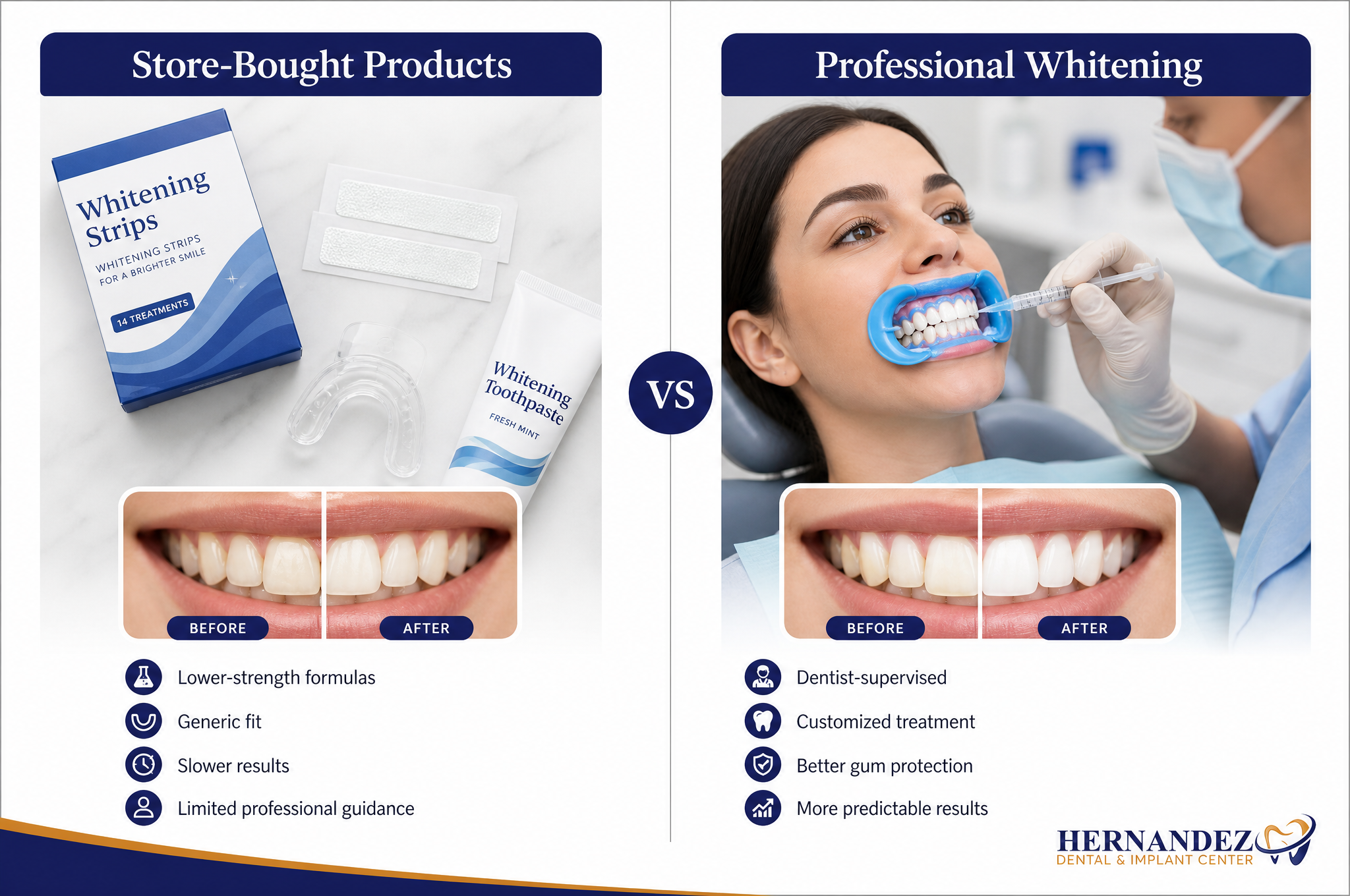
Professional Whitening vs. Store-Bought Products
Drugstore strips, toothpastes, pens, and LED kits can lighten mild surface stains, but they’re lower-strength and not customized to your teeth.
Stronger Whitening Ingredients
Dentist-supervised treatments use stronger formulas, which usually mean faster, more noticeable results — with a professional watching for sensitivity and protecting your gums along the way.
A Whitening Plan Built Around Your Smile
Not everyone should use the same whitening strength or schedule. Before recommending anything, a dentist looks at:
- The type of discoloration
- Tooth sensitivity
- Gum health
- Cavities or damaged teeth
- Existing crowns, veneers, or fillings
- Your target shade and timeline
That makes results more predictable and reduces the odds of an uneven outcome.
Better Gum Protection
Store-bought trays rarely fit well, and gel that leaks onto the gums can irritate. Professional treatment uses barriers or custom trays to keep the gel exactly where it belongs.
More Even Coverage
Generic strips and trays often miss spots, especially with crowded or rotated teeth. Dentist-applied treatment covers the visible teeth more evenly.
Teeth Whitening Options in San Antonio
Patients generally choose between in-office treatment and a custom take-home kit.
In-Office Teeth Whitening
This is the go-to for anyone who wants faster results. A typical appointment looks like:
- Examination of teeth and gums
- Protecting lips, gums, and other soft tissue
- Applying the whitening gel
- Letting it work for a set time
- Removing the gel and checking the new shade
Depending on the system and your sensitivity, the gel may be applied more than once in a single visit. Many patients see a difference after one appointment — results still vary person to person. This option works well if you’re prepping for a wedding, graduation, or big event and want results fast.
Custom Take-Home Whitening Trays
This route brightens your teeth gradually. Your dentist makes trays for your teeth and gives you gel, with instructions on how long and how often to wear them.
Why patients choose this:
- Whitening on your own schedule
- A more gradual shade change
- Even gel coverage
- Easier to manage for sensitive teeth
- Simple touch-ups down the line
Because they’re made for your mouth specifically, custom trays fit — and work — better than one-size-fits-all kits.
Light-Activated Whitening
Some offices add an LED light during in-office treatment. The peroxide gel is still doing the actual work — the light may speed up the reaction, depending on the system. A consultation can tell you whether it’s worth it for your case.
Which Stains Whiten Best?
Yellow Stains
These usually respond well—common causes: coffee, tea, food pigments, tobacco, and normal aging.
Brown Stains
These can improve too, especially when caused by food, drinks, or smoking — though deeper brown stains may need more than one round of treatment.
Gray or Blue-Gray Stains
Harder to whiten, since they often start inside the tooth. These can trace back to medication, trauma, or changes in the tooth’s internal structure. Depending on the cause, your dentist may recommend bonding, veneers, or crowns instead.
White Spots
Whitening won’t always remove white spots. Sometimes it lightens the surrounding enamel enough that the spots blend in; sometimes they stay visible. If white spots are your main concern, ask your dentist about other options.
Is Teeth Whitening Safe?
Generally, yes as long as your teeth and gums are healthy and the treatment is performed correctly.
The most common side effect is temporary sensitivity: discomfort with cold water, cool air, or hot and cold food. It usually eases once whitening is paused or finished. Mild gum irritation can also occur if the gel comes into contact with soft tissue.
How Dentists Reduce Whitening Risks
A dentist reduces these risks by choosing the right strength, protecting your gums, adjusting treatment time, recommending sensitivity toothpaste, and spacing out sessions when needed.
Whitening shouldn’t be used to mask untreated problems — cavities, cracked teeth, gum disease, and exposed roots all need to be checked first.
Does Whitening Damage Enamel?
When used as directed, no professional whitening product is designed to strip or damage healthy enamel. Problems tend to show up when products are overused, left on too long, or applied to unhealthy teeth. Stacking multiple whitening products at once won’t get you better results, just more sensitivity. Following your dentist’s instructions is the safest route.
How Long Do Teeth Whitening Results Last?
Anywhere from several months to a few years, depending mostly on your eating, drinking, smoking, and hygiene habits.
Regular coffee, tea, red wine, dark soda, berries, and richly coloured sauces will bring stains back more quickly. Tobacco speeds that up even more.
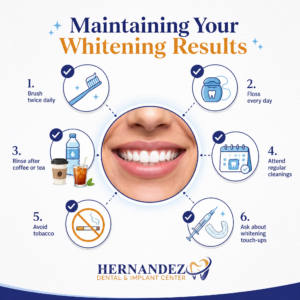
How to Maintain Your Results
- Brush twice a day
- Floss daily
- Keep up with dental cleanings.
- Rinse with water after dark drinks.
- Skip tobacco
- Use whitening toothpaste if recommended.
- Do occasional touch-ups under a dentist’s guidance
You don’t have to give up coffee drink water afterward and avoid sipping it all day.
Who’s a Good Candidate for Teeth Whitening?
Most adults with healthy teeth and gums qualify. You’re likely a good candidate if your discolouration is caused by coffee, tea, tobacco, dark foods, aging, or mild-to-moderate surface staining.
Whitening may need to wait or be skipped — if you have untreated cavities, active gum disease, cracked or damaged teeth, severe sensitivity, exposed roots, or certain internal discoloration. It’s also generally not recommended during pregnancy or breastfeeding unless your provider says otherwise, and kids and teens should be evaluated by a dentist first.
Will Whitening Change the Colour of Crowns or Veneers?
No — whitening only affects natural teeth. It won’t lighten crowns, veneers, bridges, bonding, tooth-colored fillings, or implants.
That matters if you have visible restorations in front: if your natural teeth get several shades lighter, an existing crown can suddenly look darker by comparison. Your dentist can help plan around this so your smile stays even.
What Does Teeth Whitening Cost in San Antonio?
Cost depends on the treatment and how much whitening is needed — in-office vs. take-home, the system used, number of sessions, severity of discoloration, whether a cleaning or exam is needed first, custom tray fabrication, and future touch-ups.
Store-bought products cost less upfront but usually deliver slower, less even results. A consultation is the best way to get an accurate price based on your teeth and goals.
Frequently Asked Questions
How Long Does Professional Teeth Whitening Take?
In-office appointments usually run 30–90 minutes, depending on the system and number of applications. Take-home whitening takes several days to a few weeks.
Can Yellow Teeth Become White Again?
Usually, yellow stains respond well to professional whitening, though your final shade depends on your natural tooth colour and the cause of the discoloration.
Is Teeth Whitening Painful?
Not typically, though temporary sensitivity is common. Tell your dentist if your teeth are already sensitive so they can adjust the treatment.
How Many Shades Whiter Will My Teeth Get?
Varies by patient. Some see a big change after one visit; others need a gradual plan. Your dentist can give you a realistic estimate after an exam.
How Often Can I Whiten My Teeth?
Depends on your oral health, sensitivity, and the method you use. Whitening too often can make your teeth more sensitive without better results, so stick to your dentist’s schedule.
Does Whitening Work on Deep Stains?
Some improve, but internal gray or blue discoloration is less predictable. Bonding or veneers may be a better fit in those cases.
Should I Get My Teeth Cleaned Before Whitening?
If there’s plaque, tartar, or surface buildup, yes it helps the gel reach your teeth more evenly.
Schedule a Teeth Whitening Consultation in San Antonio
Professional whitening can undo years of discoloration, leaving your smile noticeably brighter. The right approach depends on what’s causing your stains, the condition of your teeth and gums, your sensitivity, and how fast you want results.
Ready to get started? Schedule a consultation with our San Antonio dental team we’ll review your smile, walk through your options, and put together a safe, personalized whitening plan.