

Dental treatment planning uses your dental exam results, oral health needs, and personal goals to create a clear care plan. It explains what issues need attention, your treatment options, and the best steps to improve your oral health.
A treatment plan can be simple, like repairing one tooth, or more detailed if you need care for multiple teeth, gums, bite problems, or missing teeth. It helps you understand your diagnosis, recommended treatments, timeline, costs, and aftercare.
When choosing a dental office, look for a team that provides clear explanations, has experience, uses modern technology, and makes you feel comfortable throughout your treatment process.
What Is Dental Treatment Planning?
Dental treatment planning is the process of creating a clear approach to managing your oral health needs. It starts with discussing your concerns, symptoms, medical history, previous dental care, and treatment goals.
The dental team then evaluates your oral health by examining your teeth, gums, bite, jaw, and existing dental work. X-rays, photos, scans, or other diagnostic tools may be used when needed to better understand your condition.
After reviewing the findings, the dentist explains your diagnosis and available treatment options. The recommended care is organized based on factors such as urgency, comfort, function, appearance, healing, and long-term oral health.
A complete dental record may include your diagnosis, treatment recommendations, available options, clinical findings, and consent information.
Call me For any information (210) 533-8191
“We value your feedback! If you’ve visited us, please take a moment to leave a review on our Google My Business page: Leave a Review. Your input helps us improve and serve you better!”
Dental Treatment Plan Definition
A dental treatment plan is a personalized roadmap that documents a patient’s oral health conditions, recommended procedures, available alternatives, treatment priorities, expected sequence, estimated fees, and follow-up needs.
The plan helps answer important questions:
- What dental conditions have been identified?
- Which problems should be addressed first?
- What treatment is being recommended?
- Are there reasonable alternatives?
- How many appointments may be required?
- What healing or monitoring may be necessary?
- What costs may be involved?
- What happens if treatment is delayed?
A plan may be presented verbally and in writing. Patients should have an opportunity to review it, ask questions, and understand the recommendations before deciding whether to proceed.
Diagnosis Versus Treatment Planning
A dental diagnosis and a dental treatment plan are related, but they are not the same.
A diagnosis identifies the condition. Examples may include tooth decay, gum inflammation, a fractured tooth, an infection, missing teeth, bite problems, or failing dental work.
A treatment plan describes the possible response to that condition. It may include one recommended treatment, several alternatives, a sequence of procedures, or monitoring when immediate intervention is not necessary.
The same diagnosis does not automatically result in an identical plan for every patient. Treatment may depend on:
- The severity and location of the problem
- The condition of the surrounding teeth and gums
- The amount of healthy tooth structure remaining.
- Bone support
- Bite forces
- Medical history and medications
- Previous treatment
- Long-term prognosis
- Personal preferences
- Time and financial considerations
A proper treatment plan, therefore, connects the diagnosis to the patient’s broader health needs and practical circumstances.
Why a Personalized Dental Plan Matters
Treating one visible problem without considering the rest of the mouth may lead to incomplete or poorly coordinated care. For example, placing a permanent restoration before active gum disease has been controlled may affect the long-term stability of the result. Replacing a missing tooth without examining the available space, bone, gums, and bite may also overlook important factors.
Personalized treatment planning helps the dental team consider how different procedures may affect one another. It also allows urgent needs to be separated from treatments that can safely be scheduled later.
The result should be a plan that is clinically appropriate, understandable, realistic, and aligned with the patient’s priorities.
Who May Need a Dental Treatment Plan?
Almost every patient can benefit from a dental treatment plan, even for simple dental needs. A detailed plan is especially helpful when multiple concerns need attention or when treatment requires several visits.
Dental treatment planning may be recommended for patients with:
- Tooth pain, sensitivity, or discomfort
- Swelling or possible infection
- Cracked, chipped, or damaged teeth
- Cavities or tooth decay
- Gum problems, including bleeding or swelling
- Loose or missing teeth
- Trouble chewing
- Worn teeth or bite concerns
- Damaged crowns, fillings, bridges, or dentures
- Smile appearance concerns
- A need for dental implants
- Multiple recommended treatments
- Questions about a previous treatment plan
You do not always need pain or noticeable symptoms to benefit from treatment planning. Some dental issues can develop slowly without clear warning signs.
A dental examination is needed to identify the cause of a problem and determine the right treatment options for your needs.
What Is Included in a Dental Treatment Plan?
The exact format of a dental treatment plan can vary. However, a useful plan should explain more than the names and prices of procedures.
Examination and Diagnostic Findings
A treatment plan starts with information collected during your dental evaluation. The dentist may review:
- Teeth and existing dental work
- Gums and supporting tissues
- Cavities, damage, or signs of infection
- Missing or loose teeth
- Bite and jaw concerns
- Areas of pain or sensitivity
- Soft tissues inside the mouth
X-rays, photos, digital scans, and previous dental records may also be used when needed to better understand your condition.
Diagnoses and Areas of Concern
Your treatment plan should explain the dental problems that need attention and why specific treatments are recommended.
For example:
- A filling may be recommended for a cavity.
- A crown may be suggested for a severely damaged tooth.
- Gum treatment may be needed for periodontal problems.
- Tooth replacement options may be discussed for missing teeth.
Some conditions require immediate care, while others can be monitored or treated later.
Recommended Treatment Options
A dental treatment plan may include different treatment choices based on your needs. The best option depends on factors such as the condition of your teeth, gums, and bone health, as well as your long-term goals.
Your dentist should explain the benefits, limitations, maintenance needs, and expected results of each option so you can make an informed decision.
Benefits, Limitations, and Possible Risks
Before starting treatment, you should understand:
- The purpose of the procedure
- Expected benefits
- Possible risks or limitations
- Alternative options
- Recovery and healing expectations
- What may happen if treatment is delayed?
Informed consent means understanding your choices before deciding on care.
Treatment Priority and Sequence
A treatment plan usually organizes care based on urgency and importance. Treatment may follow a sequence such as:
- Managing pain, infection, or urgent concerns
- Treating cavities or gum problems
- Restoring damaged teeth
- Replacing missing teeth if needed
- Improving function or appearance
- Planning long-term dental maintenance
The order may change depending on your oral health, healing, and personal preferences.
Estimated Timeline and Number of Visits
Your treatment plan may include an estimated timeline and number of appointments. Some procedures can be completed in one visit, while others may require multiple appointments, healing time, or coordination with specialists.
The timeline can change if new problems are found, healing takes longer, or your treatment needs change.
Estimated Fees and Insurance Information
A treatment plan may include:
- Procedure costs
- Estimated insurance coverage
- Expected out-of-pocket expenses
- Payment options
Insurance coverage depends on your specific plan and may be affected by deductibles, annual limits, waiting periods, and coverage restrictions.
A pretreatment estimate can help you understand possible costs, but it does not always guarantee final payment from the insurance provider.
Consent and Patient Decisions
Before treatment begins, you should have the opportunity to ask questions and understand your options. You can discuss alternatives, review costs, request a written plan, delay treatment when appropriate, or seek a second opinion.
A dental treatment plan is designed to help you make informed decisions and choose care that fits your health needs and goals.

How Dental Treatment Planning Works
Every patient’s dental needs are different, but treatment planning usually follows a few important steps. These steps help the dental team understand your concerns, evaluate your oral health, and create the right care plan for you.
Step 1: Discussing Your Concerns and Goals
The process begins by understanding why you are visiting the dentist. You may have concerns about pain, sensitivity, missing teeth, appearance, treatment costs, or previous dental experiences.
Your goals help the dental team decide what needs attention first and create a plan that matches your needs.
Step 2: Reviewing Medical and Dental History
Your overall health can affect your dental care. The dental team may review:
- Current medications and allergies
- Medical conditions
- Previous dental treatments
- Gum disease history
- Teeth grinding or clenching.
- Dental anxiety or past treatment concerns
Providing accurate information helps the dentist recommend safe and effective treatment options.
Step 3: Completing a Dental Examination
The dentist examines your teeth, gums, bite, jaw, and existing dental work. The exam may look for:
- Cavities or tooth damage
- Gum problems
- Cracks or worn teeth
- Missing teeth
- Bite concerns
- Areas causing pain or sensitivity
This evaluation helps identify problems and determine the best order for treatment.
Step 4: Collecting Diagnostic Records When Needed
Additional records may be recommended to better understand your condition, including:
- Dental X-rays
- Photos
- Digital scans
- Bite records
- Previous dental records
Not every patient needs the same tests. The dental team selects records based on your specific needs.
Step 5: Establishing a Diagnosis
After reviewing your examination and records, the dentist identifies areas that need treatment or monitoring.
A diagnosis explains why a specific treatment is recommended and helps create a clear plan for your care.
Step 6: Comparing Treatment Options
Some dental concerns have multiple treatment choices. Your dentist may discuss options based on:
- Treatment goals
- Expected results
- Number of visits
- Maintenance needs
- Benefits and limitations
- Estimated costs
Understanding your options helps you choose the care that best fits your situation.
Step 7: Creating the Treatment Plan
A written treatment plan organizes your recommended care. It may include:
- Dental concerns are being treated.
- Recommended procedures
- Treatment order
- Alternative options
- Estimated visits and costs
- Follow-up care
The plan should be explained clearly so you understand each step before treatment begins.
Step 8: Reviewing and Updating the Plan
Your treatment plan may change if your dental needs change. Updates may be needed if:
- New symptoms appear
- A tooth responds differently than expected.
- Gum health changes
- Your treatment goals change
- Additional findings are discovered.
Your dental team should explain any changes and discuss the next steps with you.
The Main Phases of Dental Treatment Planning
Patients often search for the four or five phases of dental treatment planning. However, there is no single sequence that applies identically to every patient.
A practical plan may be divided into the following phases.
Phase 1: Urgent or Emergency Care
The first priority is usually to evaluate conditions that may require prompt attention.
Pain, Swelling, Infection, or Dental Trauma
Urgent care may involve assessing:
- Severe tooth pain
- Facial or gum swelling
- Broken teeth
- Dental trauma
- Uncontrolled bleeding
- A lost restoration is causing symptoms.
- Difficulty opening the mouth
- Other sudden changes
The purpose of this phase may be to relieve symptoms, control infection, protect damaged tissues, or stabilize the condition before longer-term care begins.
Urgent treatment does not always complete the entire treatment plan. A temporary measure may be followed by definitive treatment after the immediate concern has been controlled.
Phase 2: Disease-Control and Preventive Care
After urgent concerns have been addressed, active oral disease may need to be controlled.
Decay, Gum Disease, and Oral Hygiene Risks
This phase may include:
- Treating active cavities
- Managing gum inflammation or periodontal disease
- Improving daily oral hygiene
- Removing deposits from the teeth
- Addressing areas that collect food or plaque
- Managing contributing habits
- Applying preventive treatment when appropriate
- Reassessing the response to care
The goal is to create a healthier environment before completing complex restorative or cosmetic procedures.
Phase 3: Restorative or Surgical Care
Once urgent and disease-control needs have been managed, the plan may move toward rebuilding damaged areas or preparing for replacement teeth.
Restorations, Crowns, Root Canal Treatment, Extractions, and Implants
Depending on the diagnosis, this phase may involve:
- Fillings
- Crowns
- Root canal treatment
- Extractions
- Gum procedures
- Bone-related procedures
- Dental implant placement
- Temporary restorations
- Other restorative or surgical care
The order depends on the condition of the teeth, supporting tissues, bite, healing requirements, and final restorative goals.
Phase 4: Functional and Aesthetic Rehabilitation
This stage focuses on achieving the planned result once the disease has been controlled and the necessary foundation has been established.
Replacing Teeth, Improving Function, and Refining Appearance
Care may include:
- Bridges
- Implant-supported restorations
- Partial or complete dentures
- Final crowns
- Bite adjustments
- Orthodontic treatment
- Veneers or other cosmetic procedures
- Whitening after necessary restorative work
Health and function should be considered alongside appearance. Cosmetic changes should not ignore active disease, structural weakness, gum health, or bite concerns.
Phase 5: Maintenance and Monitoring
A completed treatment plan does not end the need for dental care.
Maintenance may include:
- Routine examinations
- Professional cleanings
- Periodontal maintenance
- Monitoring previous treatment
- Reviewing home-care habits
- Checking the bite
- Evaluating implant restorations
- Monitoring areas that were not treated
- Updating diagnostic records when clinically necessary
The recommended schedule depends on the patient’s oral health, disease risk, previous treatment, and ongoing needs.
Simple and Complex Dental Treatment Planning
Simple Dental Treatment Plans
A simple plan may involve one condition and a limited number of appointments.
Examples include:
- Restoring a small cavity
- Repairing a chipped tooth
- Replacing one filling
- Treating sensitivity after identifying its cause
- Completing preventive care
- Monitoring an early or stable finding
Even a simple plan should explain the diagnosis, proposed treatment, alternatives when applicable, expected result, and cost.
Complex Dental Treatment Plans
Complex treatment planning is used when several conditions or procedures must be coordinated.
A complex case may involve:
- Multiple damaged or missing teeth
- Advanced periodontal problems
- Significant tooth wear
- Limited bone support
- Failing dental restorations
- Bite problems
- Several extractions
- Implant-supported treatment
- Full-mouth rehabilitation
- Orthodontic and restorative care
- Medical factors affecting treatment
- A combination of functional and cosmetic goals
The main challenge is not simply the number of procedures. It is determining how the procedures interact and in what order they should occur.
Coordination Between Dental Professionals
Some treatment plans can be completed within one general dental office. Others may benefit from referral or coordination with professionals specializing in specific areas of care.
Coordination may be needed when treatment involves:
- Advanced gum problems
- Complex root canal care
- Oral surgery
- Dental implants
- Orthodontics
- Pediatric needs
- Complex restorations
- Significant jaw or bite concerns
Clear communication helps ensure that each stage supports the overall treatment objective.
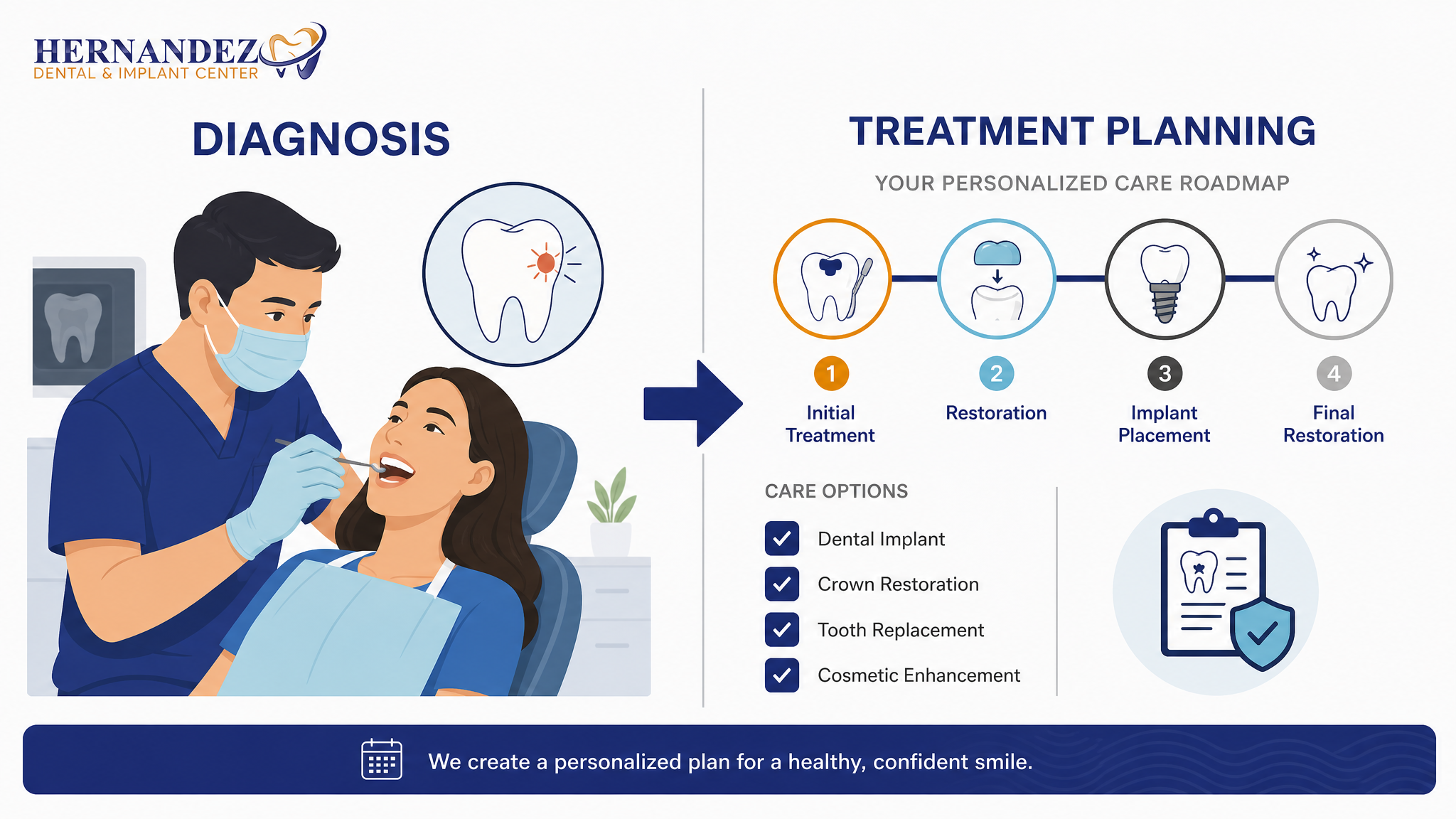
Dental Treatment Planning for Common Needs
Dental Implant Treatment Planning
Dental implant treatment planning involves more than selecting the location of an implant.
The evaluation may consider:
- The reason the tooth is missing
- Available space
- Gum health
- Bone dimensions
- Nearby teeth
- Bite forces
- Medical history
- Tobacco or nicotine use
- Healing factors
- The final crown, bridge, or denture design
- Maintenance requirements
In some cases, treatment may involve tooth removal, healing, bone-related procedures, implant placement, additional healing, and final restoration. The order and timing depend on the individual case.
Gum Disease Treatment Planning
Gum treatment planning may evaluate:
- Gum inflammation
- Bleeding
- Pocket measurements
- Recession
- Bone support
- Tooth mobility
- Plaque and calculus
- Home-care habits
- Previous periodontal treatment
- Risk factors
The initial plan may focus on controlling inflammation and infection. The response can then be reassessed before long-term restorative or implant treatment proceeds.
Crown and Bridge Treatment Planning
A crown treatment plan may consider:
- The amount of healthy tooth structure
- Existing fillings or crowns
- Cracks
- Decay
- Nerve health
- Gum condition
- Bone support
- Bite forces
- Available space
- Restorability
- Material options
For a bridge, the condition of the supporting teeth and the space being restored must also be evaluated.
Cosmetic Dental Treatment Planning
Cosmetic planning should begin with an evaluation of oral health and function.
The assessment may include:
- Tooth color
- Tooth shape and proportion
- Alignment
- Gum levels
- Existing restorations
- Bite
- Tooth wear
- Missing teeth
- Enamel condition
- Patient expectations
Whitening, bonding, veneers, crowns, orthodontic treatment, or a combination of procedures may be considered. The most conservative clinically appropriate option should be discussed when alternatives exist.
Pediatric Dental Treatment Planning
Treatment planning for children may consider age, development, disease risk, cooperation, prevention, growth, guardian involvement, and the timing of permanent tooth eruption.
The American Academy of Pediatric Dentistry emphasizes individualized care based on assessed needs, risk, development, and continuity of oral health management.
Planning for Patients With Medical Conditions
Certain medical conditions, medications, or planned medical treatments may affect dental care.
Depending on the situation, the dental team may need to:
- Modify treatment timing
- Review medication considerations
- Request medical information
- Coordinate with another healthcare professional.
- Priorities infection control
- Allow additional healing time.
- Choose an appropriate setting for care.
Patients should not stop or alter prescribed medication without instructions from the professional who manages that medication.
Dental Treatment Costs, Insurance, and Phased Care
Cost is an important part of treatment planning, especially when several procedures are recommended.
What Affects the Cost of a Dental Treatment Plan?
The total cost may depend on:
- Number of teeth involved
- Type of treatment
- Complexity
- Diagnostic records required
- Materials selected
- Laboratory work
- Surgical needs
- Specialist involvement
- Sedation or comfort options
- Temporary restorations
- Follow-up care
- Maintenance requirements
Two patients with similar symptoms may receive different estimates because their diagnoses and clinical needs are different.
Treatment Estimates Versus Final Costs
A treatment estimate is based on the known findings and planned procedures.
The final cost may change if:
- Additional decay or damage is discovered.
- A tooth cannot be restored as expected.
- The treatment plan is modified.
- Another procedure becomes necessary.
- Laboratory or material selections change
- Insurance processes the claim differently.
- The patient selects another treatment option.
Whenever circumstances allow, any meaningful change should be discussed before additional treatment proceeds.
Dental Insurance Pretreatment Estimates
A pretreatment estimate may show how the benefit plan expects to process certain procedures. However, it may not account for every factor affecting the final payment. Eligibility, deductibles, annual maximums, waiting periods, frequency limitations, alternative benefits, and claims already processed can change the amount paid.
Patients should consider asking:
- Is this an estimate or authorization?
- Does the plan have an annual maximum?
- Has the deductible been met?
- Are there waiting periods?
- Are frequency limits involved?
- Does the plan apply an alternative benefit?
- How long is the estimate valid?
- What portion may remain my responsibility?
Can Dental Treatment Be Completed in Stages?
Some treatment plans can be phased according to urgency, health, healing, time, and budget. For example, the plan may prioritize:
- Relieving pain.
- Controlling active disease.
- Protecting teeth at the highest risk.
- Restoring function.
- Completing optional improvements.
Phasing is not appropriate when delaying care creates an unacceptable clinical risk. The safe order should be determined through a discussion with the treating dentist.
What to Expect at a Dental Treatment Planning Consultation in Hernandez Dental & Implant Center
A treatment-planning consultation is an opportunity to understand your oral health before committing to care.
What to Bring
Consider bringing:
- A current medication list
- Details of allergies and health conditions
- Dental insurance information
- Relevant previous dental records
- Recent X-rays, if available
- Information about previous treatment
- A list of symptoms
- Questions about recommendations or costs
- Your main functional or appearance-related goals
Complete information helps the dental team evaluate your needs more accurately.
What May Happen During the Visit
The appointment may include:
- A conversation about your concerns
- Review of your medical and dental history
- A clinical examination
- Diagnostic imaging when appropriate
- Photographs or scans are helpful.
- Discussion of findings
- Explanation of possible treatment options
- Review of priorities
- A preliminary or completed written plan
Complex cases may require additional records or a separate consultation before the final plan is presented.
What Happens After the Consultation?
After the evaluation, the next step may involve:
- Reviewing the written plan
- Obtaining an insurance estimate
- Scheduling urgent treatment
- Completing additional testing
- Arranging a referral
- Dividing treatment into phases
- Seeking a second opinion
- Monitoring an area before deciding
- Scheduling a follow-up discussion
Patients should not feel pressured to accept a complex plan before their questions have been answered.
Why Choose Local Dental Treatment Planning in San Antonio?
Dental care that requires several visits is easier to coordinate when the office is accessible for examinations, treatment, follow-up, and unexpected concerns.
Working with a local San Antonio dental office may support:
- Convenient follow-up appointments
- Continuity of care
- Easier monitoring between treatment phases
- Communication when symptoms change
- Coordination with local dental professionals
- Review of treatment plan adjustments
- Ongoing preventive and maintenance care
- Access to records and updated recommendations
Location alone should not determine your decision. Patients should also consider the office’s communication, transparency, relevant services, approach to informed consent, verified credentials, and ability to manage the required treatment.
Before beginning a complex dental plan, make sure you understand who will provide each procedure and how the different stages will be coordinated.
Frequently Asked Questions About Dental Treatment Planning
How long does dental treatment planning take?
A simple plan may be completed during one appointment. A complex plan may require additional imaging, scans, diagnostic models, specialist input, insurance estimates, or a separate consultation. The planning time is different from the treatment timeline. Treatment itself may take one visit or several months, depending on the procedures and healing requirements.
Do I need X-rays before receiving a treatment plan?
Not every patient needs the same X-rays. Imaging should be recommended when it is clinically necessary to diagnose a condition, evaluate structures that cannot be fully examined visually, or plan specific treatment. The appropriate images depend on symptoms, oral health history, age, disease risk, previous records, and the proposed procedure.
How do I read a dental treatment plan?
Start by matching each procedure to its diagnosis. Review the tooth number, treatment description, priority, expected sequence, alternatives, estimated fee, and insurance estimate. Ask the dental team to explain unfamiliar terms and show you the relevant findings on photographs, X-rays, scans, or diagrams.
Can a dental treatment plan change?
Yes. A treatment plan may change when new findings appear, symptoms develop, healing affects the schedule, a tooth responds differently than expected, medical circumstances change, or the patient chooses another suitable option. Whenever possible, significant changes should be explained before the revised treatment proceeds.
Can dental treatment be completed in phases?
Many treatment plans can be completed in phases. Urgent concerns and active disease are generally prioritized before long-term restorative or elective procedures.
However, delaying certain treatment may increase risk. The appropriate order should be based on the individual diagnosis rather than cost or convenience alone.
Is a dental treatment plan the same as dental insurance?
No. A dental treatment plan describes clinically recommended care. Dental insurance is a financial benefit that may contribute toward eligible services according to the contract.
A treatment may be clinically recommended even when the insurance plan excludes it or pays only a limited amount.
Can I request a second opinion?
Yes. A second opinion may be helpful when a treatment plan is complex, expensive, irreversible, or difficult to understand.
Provide the second dental office with relevant records when available, but expect that an independent examination or updated diagnostic information may still be required.
What happens if I delay recommended dental treatment?
The effect of delaying treatment depends on the diagnosis. Some conditions can be monitored safely, while others may worsen, become painful, spread, weaken the tooth, affect supporting tissues, or require more extensive care later.
Ask how urgent the condition is and what warning signs should lead you to seek prompt care.
What is included in a dental crown treatment plan?
A crown treatment plan may include the diagnosis, tooth number, condition of the remaining tooth, evaluation of the nerve and supporting tissues, material options, estimated fee, temporary crown, final crown, expected appointments, risks, and alternatives. Additional treatment may be required if decay, cracks, nerve problems, gum concerns, or insufficient tooth structure are discovered.
How are complex dental treatments coordinated?
Complex cases may be divided into diagnostic, disease-control, surgical, restorative, and maintenance phases. When more than one dental professional is involved, the treatment sequence should clarify who is responsible for each stage, what must be completed first, and how information will be shared.
Can digital planning tools help explain treatment?
Digital X-rays, photographs, scans, and models can help patients see conditions, understand treatment objectives, and compare changes over time. These tools support communication and planning, but they do not replace a clinical examination, diagnosis, or professional judgment.
Plan Your Next Step Toward Better Oral Health
A clear Treatment planning in conservative dentistry can help you understand your current oral health, compare treatment options, prepare for costs, and complete care in a safe and organized sequence. Whether you need help with one damaged tooth or several coordinated procedures, the process should begin with a thorough evaluation and an open conversation about your concerns, priorities, and available options.
To learn more about dental treatment planning in San Antonio, contact our Hernandez Dental & Implant Center office to request a consultation. A clinical examination and appropriate diagnostic information are required before personalized recommendations can be provided.
Related article:
Best Cosmetic Dentist in San Antonio
7 Best Dentists in San Antonio TX
Questions to Ask Before Starting Dental Treatment
Before beginning treatment, ask:
- What dental condition has been diagnosed, and can you explain what needs treatment?
- Why do you recommend this treatment, and how urgent is it?
- What treatment options are available, and what are the benefits and limitations of each option?
- What could happen if I delay or decide not to proceed with treatment?
- How many visits will I need, and what is the expected treatment timeline?
- What will the treatment cost, and how much can I expect to pay after insurance?
- What should I expect after treatment, including recovery, maintenance, and future care?
Clear answers make it easier to compare options and make a confident, informed decision.