
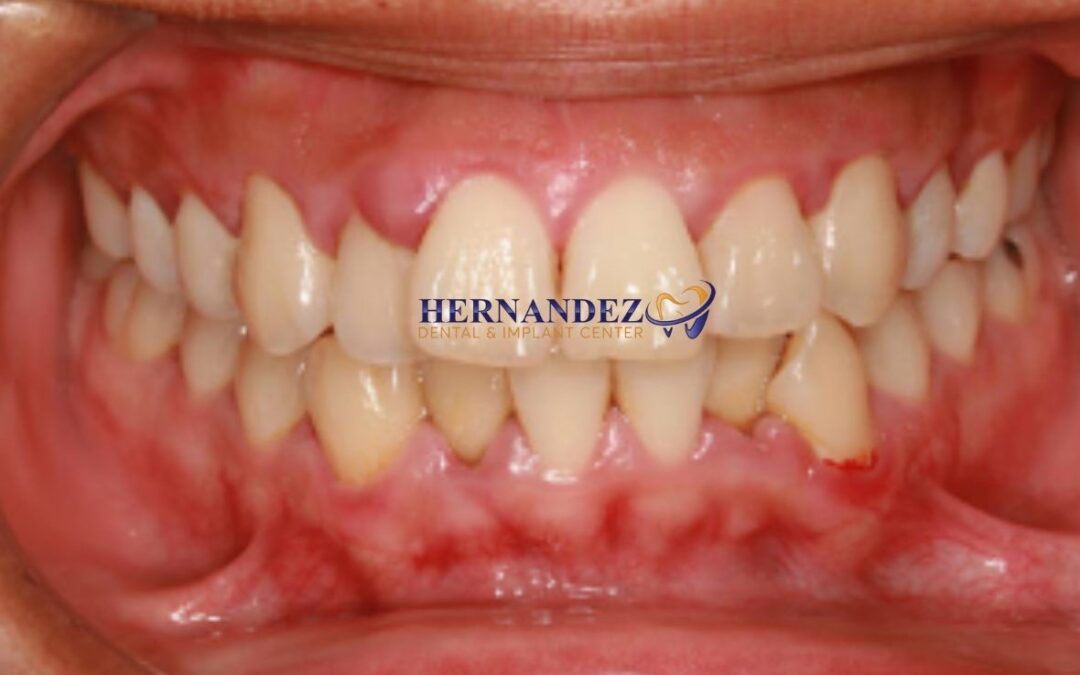
Are your gums looking puffier than usual? Do they bleed when you brush your teeth? Are they red, tender, or painful to touch? If you’re experiencing any of these symptoms, you’re dealing with swollen gums, a common problem affecting many people throughout San Antonio.
Swollen gums shouldn’t be ignored. While they might seem like a minor annoyance, they often signal an underlying issue that needs attention. This guide answers the most important questions about swollen gums so you can understand what’s happening and take action.
What Are Swollen Gums?
When your gum tissue becomes inflamed, irritated, or infected, it swells up and changes appearance. Healthy gums look firm and pink, but swollen gums appear puffy and enlarged. They typically turn red or darker than their normal color. Moreover, they feel sensitive when you touch them or eat certain foods.
This inflammation happens when something irritates or infects the delicate gum tissue. Consequently, your body responds by sending extra blood flow to the area, which causes the puffiness you see and feel.
Why Are My Gums Swollen?
Understanding the cause helps you get the right treatment. Several factors can make your gums swell up.
Plaque Buildup: This is the most common reason. When plaque accumulates along your gumline, bacteria irritate your gum tissue. Therefore, your gums respond by swelling, turning red, and bleeding easily when you brush. This stage is called gingivitis, which is reversible if caught early.
Gum Disease: If plaque isn’t removed regularly, it hardens into tartar that only a dentist can remove. When tartar builds up, it leads to periodontitis. At this stage, your gums pull away from your teeth, creating pockets where bacteria gather. Additionally, the infection can damage the bone supporting your teeth.
Hormonal Changes: Women often experience gum swelling during pregnancy, menstruation, puberty, or menopause. These hormonal fluctuations increase blood flow to your gums, making them more sensitive. Pregnancy gingivitis is common among expectant mothers throughout San Antonio.
Vitamin Deficiencies: Your gums need proper nutrition to stay healthy. Specifically, vitamin C and vitamin B deficiencies can weaken gum tissue and cause swelling. Here in San Antonio, our busy lifestyles sometimes mean we don’t eat enough fresh fruits and vegetables.
Infections: Bacterial, viral, or fungal infections cause gum swelling and pain. Furthermore, these infections often come with additional symptoms like fever or visible sores.
Tooth Abscess: This serious infection forms at the root of a tooth, creating a pocket of pus that causes severe swelling. Moreover, you’ll likely experience throbbing pain and might see a bump on your gums. Abscesses require immediate treatment because the infection can spread.
Dental Appliances: Poorly fitting dentures, retainers, or braces can rub against your gum tissue repeatedly. Consequently, this friction causes irritation and swelling.
Medications: Certain seizure medications, immunosuppressants, and blood pressure drugs cause gum overgrowth. If you started a new medication and noticed gum swelling, talk to your dentist and doctor.
Dry Mouth: Saliva washes away food particles and neutralizes harmful acids. When you don’t produce enough saliva, bacteria multiply more easily. Living in San Antonio’s warm climate makes staying hydrated especially important since dehydration reduces saliva production.
Poor Oral Hygiene: Skipping brushing sessions, not flossing daily, or using incorrect technique allows plaque to build up rapidly. However, improving your oral hygiene routine often resolves this type of swelling quickly.
What Other Symptoms Come With Swollen Gums?
Beyond the puffiness, you’ll likely notice other warning signs. Your gums probably bleed when you brush or floss. Additionally, you might experience tenderness or pain when you touch your gums or eat.
Bad breath often accompanies swollen gums because bacteria trapped in inflamed tissue produce foul-smelling compounds. Furthermore, your gums may look unusually red or dark. In severe cases, you might notice loose teeth or taste something metallic.
How Can I Fix Swollen Gums at Home?
For mild swelling, several home remedies provide relief. However, these treatments work best for minor inflammation.
Improve Your Oral Hygiene: Brush twice daily for two full minutes and floss once daily. Focus on the gumline where bacteria accumulate. Use gentle circular motions rather than harsh scrubbing.
Salt Water Rinses: Mix half a teaspoon of salt in warm water and rinse two to three times daily. The salt reduces inflammation naturally and kills bacteria. Many people throughout San Antonio find that this remedy provides quick relief.
Antibacterial Mouthwash: Look for products containing chlorhexidine or essential oils. These ingredients help reduce bacteria that cause inflammation. However, mouthwash supplements your brushing routine; it doesn’t replace it.
Stay Hydrated: Drinking plenty of water helps your body fight inflammation naturally. Moreover, water keeps your saliva flowing, which protects against bacteria. This becomes especially important during San Antonio’s hot weather.
Cold Compress: Applying a cold compress to your cheek reduces swelling and numbs discomfort. Use it for 10-15 minutes at a time.
Soft-Bristled Toothbrush: Switch to soft bristles if you haven’t already. They clean effectively while being gentle on inflamed tissue.
When Should I See a Dentist for Swollen Gums?
Some situations require professional attention. Schedule an appointment promptly if your swelling lasts more than a week despite good oral hygiene.
Additionally, seek dental care if you experience persistent bleeding every time you brush or floss. Severe pain, especially pain that keeps you awake, requires immediate attention. Furthermore, if you notice pus between your teeth or develop a fever with swollen gums, these signs suggest infection.
Loose teeth or gum recession also warrant professional evaluation. Early treatment prevents long-term damage and often means simpler, less expensive treatment options.
What Professional Treatments Are Available?
Your dentist can provide several effective treatments depending on the cause.
Professional Cleaning: A thorough cleaning removes plaque and tartar from above your gumline. This often resolves swelling caused by mild gingivitis. Furthermore, your hygienist can teach proper brushing techniques.
Deep Cleaning: For advanced gum disease, scaling and root planning remove tartar from below your gumline. Your dentist smooths root surfaces to help the gums reattach. This treatment reduces inflammation and prevents further damage.
Antibiotics: If infection causes your swollen gums, your dentist may prescribe antibiotics or medicated rinses. These medications target bacteria and help gums heal faster.
Abscess Treatment: For tooth abscesses, your dentist drains the infection and may perform a root canal. This eliminates the infection source and allows proper healing.
Advanced Therapy: Serious cases may require laser therapy, localized antibiotics, or specialized periodontal treatment. These modern techniques effectively treat gum disease while minimizing discomfort.
Appliance Adjustment: When poorly fitting dental appliances cause irritation, your dentist adjusts or replaces them to eliminate inflammation.
Can I Prevent Swollen Gums?
Absolutely, and prevention is easier than treatment. Adopting these daily habits keeps your gums healthy.
Brush your teeth twice daily for two full minutes. Don’t rush; thorough cleaning makes all the difference. Additionally, floss between all teeth once daily, preferably before bedtime. This removes plaque that your toothbrush can’t reach.
Eat a balanced diet rich in vitamins, especially vitamin C from citrus fruits and leafy greens. We’re fortunate in San Antonio to have access to fresh produce year-round at local farmers’ markets. Moreover, avoid tobacco products entirely, as they dramatically increase your risk for gum problems.
Visit your dentist every six months for professional cleanings and examinations. These regular visits catch problems early when they’re easiest to treat. Furthermore, your dental team can provide personalized advice for your situation.
Taking Action for Healthier Gums
Swollen gums are your mouth’s way of telling you something needs attention. Whether the cause is plaque buildup, gum disease, irritation, or infection, addressing the problem early prevents long-term damage and protects your smile.
With proper oral hygiene, professional care when needed, and healthy daily habits, your gums can return to normal and stay healthy for years to come. You deserve comfortable, pain-free gums and a confident smile.
If you’ve noticed persistent swelling or gum sensitivity, now is the perfect time to take action. Schedule a comprehensive gum evaluation and cleaning today. Our experienced team provides gentle, effective treatment for gum swelling, gum disease, and other oral health concerns throughout San Antonio.
Call now: (210) 533-8191
Your path to healthier gums starts with one simple appointment.