
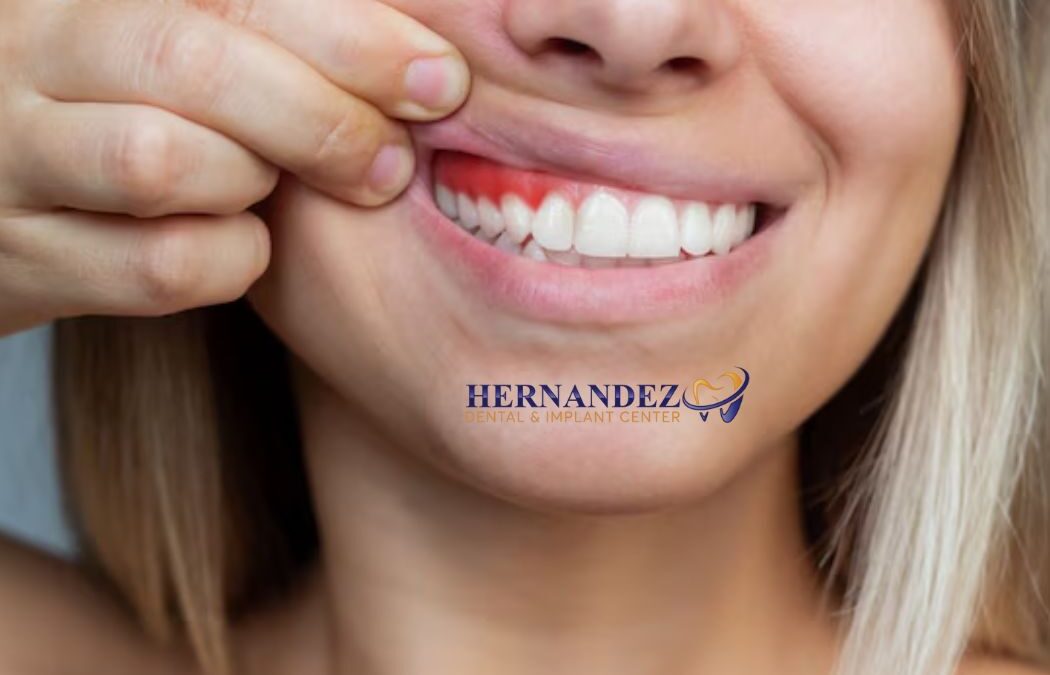
Have you noticed your gums slowly pulling back from your teeth? Do your teeth look longer than before, or feel more sensitive when you drink something cold? If so, you may be experiencing receding gums, a common dental issue affecting thousands of people throughout San Antonio.
Receding gums don’t happen overnight. They develop gradually, and without proper care, they can lead to tooth sensitivity, loose teeth, and even tooth loss. However, the good news is that gum recession can be treated, managed, and often prevented with the right approach.
What Are Receding Gums?
Simple answer: Receding gums occur when gum tissue gradually pulls away from your teeth, exposing the sensitive tooth roots underneath.
Your gums act like a protective seal around your teeth. When they recede, they expose the root surface that should normally be covered. Unlike the visible part of your tooth with hard enamel, the roots have a softer surface. Therefore, exposed roots become vulnerable to decay, damage, and extreme sensitivity.
Receding gums signal underlying inflammation or irritation. Unfortunately, once gum tissue pulls away, it won’t heal or grow back on its own. Consequently, early treatment becomes essential to protect your teeth and maintain long-term oral health.
Early Warning Signs of Receding Gums
Most people don’t realize they have gum recession until symptoms become noticeable. Watch for these common signs:
- Teeth appear longer than before
- Sharp sensitivity to hot, cold, sweet, or acidic foods
- Gums bleed easily when brushing or flossing
- Visible yellowish root surface near the gumline
- Notch or groove where gum has pulled away
- Small gaps or “black triangles” between teeth
- Loose or shifting teeth in advanced cases
If you’re noticing any of these symptoms, scheduling a dental evaluation right away prevents more serious damage down the road.
What Causes Receding Gums?
Understanding what causes gum recession helps you prevent future damage. Moreover, identifying the specific cause guides your dentist in creating the most effective treatment plan.
Gum Disease (Periodontal Disease): This is the number one cause of gum recession. Plaque buildup triggers inflammation that destroys gum tissue and bone. Without treatment, chronic gum disease leads to progressive recession.
Brushing Too Aggressively: Many people believe that brushing harder cleans better. However, aggressive brushing or hard-bristle toothbrushes actually wear down delicate gum tissue over time.
Poor Oral Hygiene: Skipping regular brushing or flossing allows plaque and tartar to accumulate. This buildup irritates your gums and creates inflammation. Consequently, gums start pulling away from teeth.
Genetic Factors: Some people naturally have thinner gum tissue, which makes them more susceptible to recession. Therefore, even with excellent oral care, genetics can play a significant role.
Hormonal Changes: Women often experience gum sensitivity during pregnancy, menopause, or hormonal fluctuations. These changes make gum tissue more vulnerable to inflammation.
Teeth Grinding (Bruxism): Many San Antonio residents grind their teeth at night without realizing it. This constant pressure puts excessive force on your gums and gradually causes recession. Furthermore, grinding often worsens during stressful periods.
Misaligned Teeth: When teeth don’t come together properly, certain teeth bear more force. This uneven pressure strains the gums around those teeth. As a result, recession develops in specific areas.
Tobacco Use: Smoking restricts blood flow to the gum tissue. Additionally, tobacco accelerates tissue breakdown and makes healing much harder.
Oral Piercings: Lip or tongue piercings constantly rub against your gums, gradually wearing the tissue away over months and years.
How Gum Recession Affects Your Health
Gum recession creates several serious health risks beyond cosmetic concerns. The exposed root surfaces become highly vulnerable to decay. Moreover, root cavities are often more difficult to treat than regular cavities.
As the recession progresses, teeth lose their supportive foundation. Consequently, they may become loose or shift out of position. This affects your bite and makes chewing difficult. Furthermore, deep pockets form where bacteria accumulate, leading to infections that can spread to the bone.
Research shows connections between gum disease and other health problems like heart disease and diabetes complications. Living in San Antonio’s warm climate, staying hydrated becomes especially important since dehydration reduces saliva production that naturally protects against gum problems.
How Dentists Diagnose Receding Gums
During your examination, your dentist uses a periodontal probe to measure pocket depth around each tooth. Healthy gums typically have pockets of 1-3 millimeters. However, deeper pockets indicate recession and possible gum disease.
Additionally, your dentist checks for inflammation, bleeding, and plaque buildup. They also take X-rays to evaluate bone loss beneath your gums. Furthermore, they assess your bite alignment to identify pressure points causing problems.
Treatment Options for Receding Gums
The right treatment depends on what’s causing your recession and how far it has progressed.
Deep Cleaning (Scaling and Root Planing): For mild to moderate recession caused by gum disease, deep cleaning is often the first step. Your dentist removes plaque and tartar from deep below your gumline, then smooths root surfaces so gums can reattach. Consequently, this reduces inflammation and prevents further recession.
Gum Grafting Surgery: When recession is moderate to severe, gum grafting restores lost tissue. Your dentist takes a small piece of tissue, usually from the roof of your mouth, and attaches it over the exposed root area. This protects exposed roots, reduces sensitivity, prevents further recession, and provides a natural appearance. Moreover, modern techniques make the procedure much more comfortable.
Pinhole Surgical Technique: This minimally invasive alternative to traditional grafting has become increasingly popular. Your dentist makes a tiny hole in your gum tissue, then uses special instruments to reposition the gums over exposed roots. Because there are no incisions or sutures, healing happens much faster with minimal discomfort.
Bite Adjustment or Orthodontics: If misaligned teeth put excessive pressure on certain areas, correcting your bite prevents future recession. Therefore, your dentist might recommend orthodontics or selective reshaping.
Custom Nightguard: For patients who grind their teeth, wearing a custom nightguard protects both teeth and gums from excessive force during sleep.
Laser Gum Treatment: Modern laser therapy removes infected tissue and promotes healthy gum reattachment. The laser precisely targets problem areas while minimizing discomfort and speeding healing time.
Lifestyle Modifications: Switching to a soft-bristle toothbrush, improving brushing technique, quitting tobacco, and maintaining consistent oral hygiene can prevent further recession.
Can Receding Gums Grow Back Naturally?
Direct answer: No gum tissue does not regenerate or grow back on its own once it has receded.
This is why early intervention is crucial. However, while lost gum tissue won’t return naturally, treatment can prevent further recession and protect exposed roots. Furthermore, advanced treatments like grafting or pinhole surgery can restore your gumline to a healthier position.
How to Prevent Receding Gums
Prevention is always easier and less expensive than treatment. You can significantly reduce your risk with these daily habits:
Brush gently twice daily using circular motions rather than aggressive scrubbing. Use a soft-bristle toothbrush or an electric toothbrush with a pressure sensor. Additionally, replace your toothbrush every three months.
Floss between all your teeth every single day to remove plaque that your toothbrush misses. Furthermore, schedule professional cleanings every six months to remove hardened tartar that causes inflammation.
If you grind your teeth, wear a custom nightguard. Moreover, avoid all tobacco products, which dramatically accelerate gum damage. Treat any signs of gum disease immediately before it progresses. Finally, eat a balanced diet low in sugar.
Here in San Antonio, our love for sweet tea and barbecue is part of our culture. However, being mindful of sugar intake and maintaining good oral hygiene afterward helps protect your gums for the long term.
When You Should See a Dentist
Schedule an appointment promptly if you notice:
- Increased tooth sensitivity to temperature
- Teeth that appear longer than before
- Gums that bleed when you brush or floss
- Visible changes in your gumline position
- Hard tartar buildup you can feel
- Teeth that feel loose or have shifted
- Persistent bad breath despite good hygiene
Early treatment prevents the problem from becoming more costly and difficult to fix. Moreover, addressing recession early often means simpler, less invasive treatments.
Taking Action for Healthier Gums
Receding gums affect thousands of people throughout San Antonio, but they’re highly treatable when caught early. With proper care, professional treatment, and smart daily habits, you can protect your gums and keep your smile healthy for years to come.
Your gums provide the foundation for strong, stable teeth. Therefore, paying attention to warning signs and seeking treatment promptly makes all the difference. Remember, once gum tissue is lost, it won’t return on its own, but the right treatment can restore your gumline and prevent further damage.
If you suspect gum recession or haven’t had a professional cleaning in over six months, now is the perfect time to take action. Schedule a comprehensive gum evaluation at Hernandez Dental & Implant Center today. Our experienced team provides expert diagnosis, advanced treatment options, and personalized care to restore and protect your smile.
Call: (210) 533-8191
1347 Fair Ave, San Antonio, TX 78223
Healthy gums start with one simple visit. Don’t wait until the problem becomes more serious; reach out today and give your smile the care it deserves.
Frequently Asked Questions
Can receding gums be reversed or healed naturally?
No, gum tissue does not grow back on its own once it has receded. However, treatments like gum grafting or pinhole surgery can restore your gumline. Additionally, proper care prevents further recession.
What is the first sign of gum recession?
Increased tooth sensitivity or teeth that appear longer than before are often the earliest signs. You might also notice a yellowish root surface becoming visible near your gumline.
Is gum graft surgery painful?
Most patients experience minimal discomfort. Your dentist uses local anesthesia during surgery, and modern techniques have made recovery much more comfortable than in the past.
Can brushing too hard really cause receding gums?
Yes, aggressive brushing is a common cause of gum recession. Using a hard-bristle toothbrush or scrubbing with too much force gradually wears down delicate gum tissue over time.
How long does recovery take after gum graft surgery?
Most people recover within one to two weeks, depending on the extent of treatment. Your dentist provides specific aftercare instructions to ensure proper healing.
About This Guide: This educational content helps understand receding gums and available treatment options. The information provided is for educational purposes and does not replace professional dental advice.